EPT Monte Carlo: The dynamic solution to the problem of poker’s broadcast breaks

People love watching live poker streams, of which PokerStars’ offering from the EPT was one of the first, is one of the most long-standing, and remains, without question, one of the very best.
But here’s the thing: what people like watching on live poker streams is, specifically, live poker. Whenever the live poker stops, perhaps for a tournament break, those impatient viewers tend to turn off. Sometimes they don’t come back.
It’s an issue that has vexed broadcast directors for as long as the streams have existed. How do you keep viewers sticking around when the principal attraction is on hold and there are so many other things for those eyes to be looking at?
True to form, the brains behind the EPT streams may have come up with a solution. In Monte Carlo this week, the broadcast has employed a so-called “dynamic delay” for the first time.
And it’s working very well indeed.
WHAT’S A DYNAMIC DELAY?
“What’s a dynamic delay?” is the obvious question. And the answer is probably more simple than you think.
All cards-up poker streams already employ a security delay. The action being broadcast “live” actually took place up to around an hour previously, ensuring players’ cards are not revealed publicly until long after the hand is complete.
This protects the integrity of the game, while also allowing viewers the chance to see the players’ cards. Commentators sit in a booth away from the live action and only watch the delayed stream. They’re seeing the hands play out for the first time on the stream and are commentating as if it’s live.

James Hartigan and Joe Stapleton both like the new dynamic delay
Typically, when the tournament goes on a break — maybe a 15-minute pause between levels, or a longer dinner break — the commentators take a break of the same duration. The broadcast shows adverts, highlights, or some other content, and the action resumes with the same delay when play gets going again.
But with a dynamic delay, the broadcast never stops. When players go on their tournament breaks, editors just cut out the dead time, splicing two periods of action together.
AN ELEGANT SOLUTION
In order for this to work, broadcasts need to start significantly later than they did previously. That’s because it’s necessary to build up a large amount of time between live and broadcast action so that cutting out the dead time doesn’t draw the broadcast action too dangerously close to the live stuff.
At the start of the day, there’s perhaps a three-hour delay between live action and broadcast. But as the day progresses, and various tournament breaks are cut out, the delay gets progressively shorter.
It will never be anything less than 30 minutes, maintaining the original purpose of the security delay. But it allows the viewer to experience the action in one continuous flow. No reason to switch off.
A SUCCESSFUL DEBUT
PokerStars Ambassador James Hartigan, who has been the lead commentator on PokerStars streams since the very start, says the experiment has been successful so far. Referencing how the EPT stream used to fill the gaps, Hartigan says: “I think it’s working well. I get the sense that the viewers like watching uninterrupted coverage and not having to endure a handful of hands from EPT 2007 every two hours.”
The first broadcast to utilise the delay was the €100K One Drop tournament earlier this week, and it continued through the €250K Super High Roller and the €100K Winner-Takes-All Invitational. The tech wizards behind the scenes have ensured the broadcasts have all been smooth and hitch-free, releasing plenty of other advantages as well.
“If the tournament starts late, it doesn’t matter,” Hartigan says. “We no longer have to waffle for 10-15 minutes at the start of the day, we just simply cut out the dead time.”
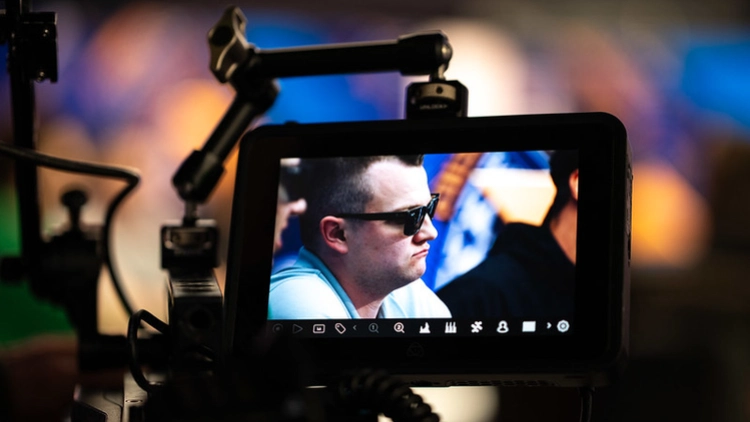
The stream quality remains the same. It’s just a little later
Hartigan’s partner Joe Stapleton is a fan too. “It’s great for me,” Stapleton says. “It means I don’t have to start work until 3pm.”
More seriously, Hartigan also highlights another benefit of the delayed start. Much of poker’s English-speaking audience is based in North America, where the time difference means that a typical day’s play on the EPT starts at anything from 4-7 a.m. Only the hardest of hardcore fans would be getting up at that time to watch.
However, the later start time allows these viewers to watch at a much more agreeable time, and so can boost viewer numbers.
With so many benefits, and so few drawbacks, Hartigan thinks the idea is here to stay.
“I’d be very surprised if we didn’t stick with this workflow for future EPTs,” he says.
Further reading
EPT information hub
Monte Carlo activities guide
Official EPT site
EPT photo gallery

Latest Articles






View Other Blogs