Casino Game Variance and Volatility: What Players Should Expect
When choosing a casino game, players often look at the theme, potential payouts, bonus features and overall entertainment value. But there is another characteristic that can have a major impact on how a game feels over the course of a session: variance, often discussed alongside volatility.
These concepts help describe how a game’s results can be distributed over time. Some games may produce relatively frequent wins, with many of those wins being modest. Others may produce fewer winning outcomes but occasionally deliver much larger payouts. Neither approach is inherently better or more likely to produce a profit. They simply create different experiences and different patterns of results.
Understanding variance and volatility can therefore help players make more informed choices. Someone looking for shorter, more predictable-feeling sessions may prefer a different volatility profile from someone who enjoys games with more dramatic swings. The important point is that volatility describes the character of potential results, not whether a game is “winnable.”
What Is Casino Game Variance?
Variance is a statistical measure of how widely individual results can differ from their average outcome. In a casino setting, this can be useful for describing the difference between a game where results tend to cluster relatively closely together and one where results can be much further apart.
A simple example can help. Imagine two games with the same theoretical return over a very large number of plays. Game A produces lots of smaller wins, while Game B produces fewer wins but has the possibility of much larger payouts. Their long-term mathematical return could be similar, but the experience of playing them could feel completely different.
That difference is where variance becomes relevant. High variance generally means outcomes are more spread out, while lower variance means results tend to be closer to the game’s expected outcome. It is a statistical concept rather than a prediction of what will happen during your next spin, hand or round.
This distinction is important when discussing casino games because short sessions can produce results that look nothing like the game’s long-term statistical profile. A high-variance game can produce a large win early in a session, while a low-variance game can still produce a losing session.
Variance describes a distribution of possible results. It does not tell you what your individual result will be.
What Does Volatility Mean?
Volatility is often used by casino players and game developers to describe the way wins and losses are distributed during gameplay.
The terms variance and volatility are sometimes used interchangeably, particularly when discussing slots, although they are not always technically identical. Variance is a formal statistical concept, while volatility is commonly used as a more accessible way of describing how much a game’s results can fluctuate.
In practical terms, you can think of volatility as helping answer a question such as: “What kind of swings might I experience while playing this game?”
A lower-volatility slot might provide winning combinations relatively often, but those wins may generally be smaller. A higher-volatility slot might go through longer periods without a significant payout before producing a larger win.
This does not mean the lower-volatility game is safer, profitable or better. It simply means the pattern of results may feel different.
The same principle applies in reverse. A high-volatility game isn’t necessarily a better opportunity because it offers larger potential payouts. Those payouts may be less frequent, and there can be greater swings between winning and losing results.

Low, Medium and High Volatility
Casino games are often described using broad categories such as low, medium or high volatility.
These labels aren’t universal mathematical standards. One provider’s “high volatility” game may have a different statistical profile from another provider’s game carrying the same description. Players should therefore treat volatility labels as useful general guidance rather than precise measurements.
Low Volatility
Lower-volatility games generally tend to produce winning outcomes more frequently, although the individual wins may be smaller.
For example, a slot might produce regular combinations that return modest amounts relative to the player’s stake. This can create a smoother-feeling session compared with a game where large gaps between wins are more common.
That does not mean the player is guaranteed to remain ahead. A sequence of small wins can still be outweighed by losing spins, and the game’s RTP and other mathematical characteristics remain important.
Medium Volatility
Medium-volatility games sit somewhere between the two extremes.
They may offer a mixture of relatively regular smaller wins and less frequent larger payouts. For many players, this can provide a balance between the rhythm of gameplay and the possibility of bigger individual outcomes.
Again, “balance” does not mean improved odds. It simply describes the potential distribution of results.
High Volatility
Higher-volatility games generally have greater variation in potential results.
A player may experience longer stretches without a significant win, followed by a larger payout. Some high-volatility slots are built around bonus rounds, multipliers or jackpot-style features that contribute to this profile.
This can make the game feel more dramatic, but it also means bankroll swings can be larger.
For someone playing with a fixed budget, that characteristic may be particularly noticeable.
Volatility Is Not the Same as RTP
One of the most important distinctions for casino players is the difference between volatility and RTP. RTP, or return to player, represents the theoretical percentage of wagers a game is designed to return over a very large number of plays.
For example, a slot with a theoretical RTP of 96% is designed to return $96 for every $100 wagered across a sufficiently large statistical sample.
That does not mean that a player who wagers $100 should expect to receive exactly $96 back during an individual session. Results can vary considerably.
Volatility describes the distribution of those results, while RTP describes the game’s theoretical long-term return. Two games could theoretically have the same RTP while having very different volatility profiles.
One might distribute its theoretical return through many smaller payouts, while another could rely more heavily on less frequent, larger payouts. This is why looking at RTP alone doesn’t necessarily tell you what a game will feel like to play.
Why Two Games With the Same RTP Can Feel Completely Different
Consider two hypothetical slots, both with an RTP of 96%. The first has relatively low volatility. It produces smaller winning combinations regularly, although the majority of those wins are not large enough to transform a session.
The second has high volatility. Winning combinations are less frequent, but its bonus features can produce considerably larger payouts.
Over a sufficiently large number of plays, their theoretical returns could be similar. During a 30-minute session, however, the experiences could be dramatically different.
The first game might produce numerous small wins and relatively frequent changes to the player’s balance. The second could involve considerably longer stretches without a meaningful payout.
Neither game is inherently more likely to make a player money simply because its volatility is lower or higher.
Slot Volatility and Bonus Features
Volatility can be particularly noticeable in modern video slots because many games include features that can produce significantly different outcomes.
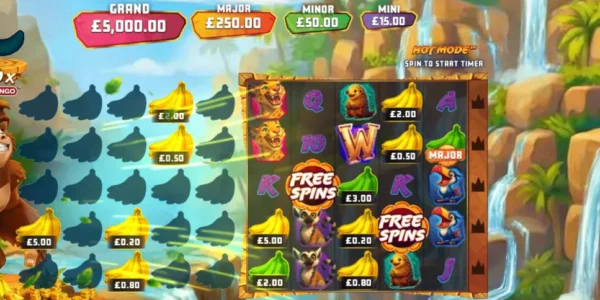
Free Spins, multipliers, expanding Wilds, bonus games and jackpot features can all contribute to a game’s overall payout distribution.
For example, a slot might provide relatively modest base-game wins but have a bonus round capable of producing a much larger payout. If those bonus rounds are relatively infrequent, they can have a significant influence on the game’s overall volatility.
This is one reason why players should read the paytable and game information before playing.
The paytable can explain how symbols work, what triggers bonus features and what different combinations can pay. Game information may also provide details about RTP and, where supplied by the developer, volatility.
Understanding these details gives players a better idea of the type of game they are choosing.
Volatility in Table Games
Variance and volatility aren’t exclusive to slots. Table games can also produce different patterns of short-term results.
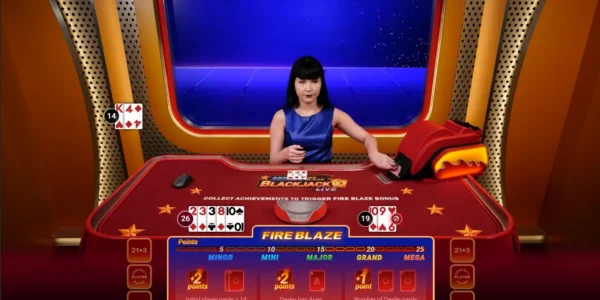
In blackjack, for example, individual hands have relatively straightforward outcomes, but the player’s bankroll can still move up and down over a session. Decisions such as doubling down or splitting can change the size of individual wagers and therefore affect the potential swings in a session.
Roulette can also produce different experiences depending on the types of bets being placed. A player making frequent even-money bets is exposed to a different pattern of potential results from someone consistently betting on individual numbers.
The underlying house edge remains important, but the size and frequency of individual wins can influence how volatile a particular betting approach feels.
In games such as roulette, the choice of bet changes the distribution of possible outcomes rather than removing the house advantage.
How Session Length Changes the Experience
Session length is another factor worth considering when thinking about volatility. A short session can produce highly unusual results. A player might experience an unusually large win, a long losing sequence or several consecutive bonus features. None of these outcomes necessarily tells you anything meaningful about the game’s long-term mathematical characteristics.
As the number of plays increases, the results can begin to reflect the underlying statistical distribution more closely, although there is never a point at which randomness stops operating.
This is sometimes described as the law of large numbers. Over a sufficiently large number of independent trials, average results tend to move closer to their expected values.
That doesn’t mean short-term results are guaranteed to “correct themselves.” If a player experiences a long losing sequence, there is no mathematical rule requiring the next spin or hand to produce a win.
Likewise, a big win doesn’t make a subsequent loss more likely simply because the player has already won. Each game has its own rules and probabilities.
Choosing a Game Based on Your Preferences
Understanding volatility can be useful when deciding which games fit your personal preferences. For example, someone who enjoys frequent smaller outcomes and prefers to see regular activity during a session may find lower-volatility games more appealing.
Another player might prefer the anticipation associated with less frequent but potentially larger payouts. That player may be more comfortable with the larger swings associated with higher-volatility games. Neither preference is mathematically superior. The important thing is understanding what you are choosing.
If you dislike watching a balance fluctuate significantly during a short session, a highly volatile game may not match your preferred experience. Conversely, if you find very frequent small wins uninteresting, a low-volatility game may not provide the type of gameplay you enjoy.
This is ultimately about entertainment preferences rather than finding a more profitable category of casino game.
Risk Tolerance and Bankroll
Volatility can also be considered alongside a player’s personal risk tolerance. A high-volatility game can potentially produce larger swings, meaning a fixed amount of money may not last as long during an unlucky sequence.
Someone with a limited entertainment budget may therefore prefer a game whose typical results feel less dramatic.
That doesn’t eliminate the possibility of losing the entire budget. It simply means the game’s statistical profile may align differently with the player’s expectations.
A sensible approach is to establish a spending limit before playing and treat that money as an entertainment expense. The chosen volatility should never be used as a reason to increase a budget after losses. Likewise, a player shouldn’t assume that switching to a different volatility level will recover previous losses.

Does High Volatility Mean Bigger Wins?
Not necessarily in the way players sometimes assume. High-volatility games can contain larger potential payouts, but the presence of a large maximum win doesn’t mean that outcome is likely to occur.
A game can advertise a maximum win worth thousands of times the stake while the probability of reaching that outcome is extremely low. Maximum win and volatility should therefore not be confused.
The same applies to promotional language such as “huge wins” or “massive multipliers.” These describe possible outcomes, not expected results. Players should look at the complete game information rather than judging a slot based solely on its maximum advertised payout.
Can Volatility Change?
A game’s volatility is generally part of its mathematical design, but the way players experience it can vary from session to session.
Randomness means that two people playing the same game for the same amount of time can have completely different experiences.
One player might trigger a bonus feature early. Another might play hundreds of spins without seeing the same feature.
Neither experience changes the underlying volatility. It is also important not to interpret a recent sequence as evidence that a game has become “hot” or “cold.” Random outcomes don’t remember previous spins or compensate for earlier results.
A game that has not produced a large win for a while isn’t necessarily getting closer to one.
Variance, Volatility and Responsible Gaming
Understanding volatility can support responsible gaming because it encourages players to think about what they are actually choosing.
Instead of selecting a game solely because it advertises a large potential payout, players can consider how its overall gameplay fits their expectations.
They can also decide how much time and money they are comfortable spending before starting. Most importantly, volatility should never be used as a justification for chasing losses.
A high-volatility game can produce a large payout, but it can also produce a long sequence of losing outcomes. Moving to a different game, increasing the stake or continuing for longer does not guarantee that losses will be recovered.
Similarly, a player shouldn’t interpret a series of wins as evidence that the game has become predictable. Randomness remains random.
What Players Should Look for Before Playing
Before choosing a casino game, there are several pieces of information worth checking. The RTP can provide an indication of the game’s theoretical long-term return. The paytable can explain winning combinations and special features. Volatility information, where provided, can give an indication of the expected distribution of results.
Players can also look at the game’s minimum and maximum stakes to make sure they are comfortable with the betting range.
For slots, it can be particularly useful to understand whether major features are central to the game’s payout structure. If a significant proportion of the potential return comes from bonus features, the experience may be considerably different from a game that produces more regular base-game wins.
The goal isn’t to find the “best” volatility. It is to understand the game before playing it.
Variance Does Not Predict Your Next Result
Perhaps the biggest misconception about variance and volatility is that they can be used to predict what will happen next. They cannot.
If a high-volatility slot has produced several losing spins, that does not make a win more likely on the next spin. If a player has just hit a substantial payout, it doesn’t mean the next several spins are destined to lose.
The game’s random number generator determines individual outcomes according to its design and rules. Volatility describes the broader statistical characteristics of those outcomes. It is not a forecasting tool.
This distinction is crucial because otherwise statistical information can easily be misunderstood as a betting system. It isn’t one.
Finding the Right Volatility for Your Playing Style
There is no universally correct volatility level for casino players. Someone who enjoys a steady rhythm of smaller outcomes may prefer lower-volatility games, and someone who enjoys greater uncertainty and is comfortable with larger fluctuations may prefer higher-volatility titles.
Medium-volatility games can offer another option for players who want something between those experiences. But none of these categories changes the fundamental fact that casino games are designed with a house advantage.
Volatility affects the pattern of results, not the fundamental mathematical relationship between player and casino. The best choice is therefore the one that matches your expectations, budget and preferred style of entertainment.
Final Thoughts
Variance and volatility are useful concepts for understanding why different casino games can feel so different, even when their theoretical RTPs are similar.
Some games may produce frequent smaller wins. Others may involve longer periods without significant payouts followed by the possibility of larger individual results. These differences can have a noticeable effect on bankroll swings and the overall feel of a session.
However, volatility should never be confused with profitability. A low-volatility game isn’t automatically easier to win at, and a high-volatility game isn’t automatically more rewarding. Neither can predict the outcome of your next spin, hand or round.
Instead, volatility is best viewed as information that can help you understand the type of experience a game may provide.
By considering volatility alongside RTP, game rules, potential payouts, session length and personal risk tolerance, players can make more informed choices about the games they play. Most importantly, those choices can be made with realistic expectations: casino games involve chance, outcomes are unpredictable in the short term, and no volatility profile guarantees a winning session.
FAQ
What is casino game volatility?
Casino game volatility describes how the results of a game can be distributed over time. Lower-volatility games generally produce more frequent, smaller wins, while higher-volatility games can involve fewer significant wins and larger fluctuations.
Is high volatility better than low volatility?
No. High and low volatility simply describe different patterns of results. Neither is inherently more profitable or more likely to produce a winning session.
Does volatility affect RTP?
Volatility and RTP describe different characteristics of a game. RTP represents the theoretical long-term return, while volatility describes how those results can be distributed. Two games can have similar RTPs but very different volatility profiles.
Can volatility predict when I will win?
No. Volatility cannot predict individual results. A losing streak does not make a win due, and a recent win does not mean a loss is due next.
Which volatility is best for beginners?
There is no universally best option. Players who prefer less dramatic bankroll fluctuations may find lower-volatility games more comfortable, while others may prefer the greater swings associated with higher-volatility games.
For details of all our Responsible Gaming Tools, how to set deposit limits, session time alerts, and reality checks, as well as how to self-exclude, check out this Responsible Gaming page. You can also find details on how to spot problem gambling, and where to get additional support.
Top Content



Trending