The History and Cultural Significance of Classic Casino Games
Casino games have changed a lot over the centuries, but some of the oldest names are still among the most recognisable.
Roulette, blackjack and baccarat all existed long before online casinos such as PokerStars, with each one shaped by different countries, periods and cultures before evolving into the versions seen today.

Why Have Some Casino Games Lasted for Centuries?
The casino floor has never stayed the same for long. New games appear, older ones change and technology has completely changed how people can play them, but roulette, blackjack and baccarat have stayed familiar names throughout much of casino history.
Part of that comes down to how easy the basic structure of each game is to recognise. Roulette centres on a wheel and numbered pockets. Blackjack is built around making a hand as close to 21 as possible without going over. And baccarat compares two hands traditionally known as Player and Banker, with nine as the highest possible total.
The rules have changed a lot over the years, but not enough to make the games unrecognisable. A player walking into a European casino during the 19th century would see very different surroundings from someone visiting a modern online casino. With that said, several of the names and the basic structure would still be familiar.
The History of Roulette
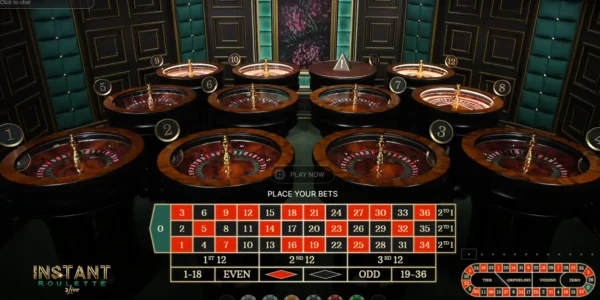
The roulette wheel has been a major part of casino gaming for centuries. Its numbered pockets, red and black sections and small ball have become part of the image of a traditional casino. It has appeared everywhere from early European gaming rooms to films, tv and modern roulette games on PokerStars.
The history of roulette is rooted in France, although its early development is more complicated than giving one person credit for inventing it. Several earlier European games used spinning wheels or betting boards, and elements from those games gradually came together before roulette started to look like the version recognised today.
Blaise Pascal and Roulette
The person most often linked with roulette’s early history is Blaise Pascal, the 17th-century French mathematician, physicist and inventor. Pascal worked on probability alongside Pierre de Fermat and also experimented with mechanical devices, including attempts to build a perpetual-motion machine. His work involving a spinning wheel is one reason he is often linked with roulette’s early history, although there is no clear evidence that he invented the game.
But Pascal can’t be given all the credit, as games involving spinning wheels were already being played in Europe. The Italian game Biribi and English wheel games such as Roly-Poly also shared elements later used in roulette, showing that the game developed from more than one influence.
Related Casino Articles



Roulette in 18th-Century France
By the end of the 18th century, roulette was much closer to the game recognised today. One important historical reference comes from Jacques Lablée’s La Roulette, ou le Jour, which describes roulette being played at the Palais-Royal in Paris in 1796.
The wheel used there included both a zero and double zero, showing that the extra house pockets were already part of the game at this point. Numbered sections, red and black colours and bets covering different groups of numbers were also becoming part of it.
The Palais-Royal was a major part of Parisian social life, with cafés, shops, entertainment venues and gaming houses all attracting visitors. It was a busy setting during a period of huge political and social change around the French Revolution, and gambling formed part of the entertainment on offer.
The Blanc Brothers and the Single-Zero Wheel
Another major change came during the 19th century. After gaming houses in Paris were closed in 1837, casino towns elsewhere in Europe became more important, particularly German spa destinations such as Baden-Baden, Wiesbaden and Bad Homburg.
François and Louis Blanc ran the casino at Bad Homburg during the 1840s. Their roulette wheel used a single zero instead of both 0 and 00, and that version later became common across much of Europe. Removing the double zero changed the maths of the game. A standard single-zero wheel contains 37 pockets numbered from 0 to 36, while a standard double-zero wheel has 38 because it also includes 00.
It also gave European and American roulette one of their most obvious differences. The single-zero version became common across much of Europe, while double-zero roulette became associated with the United States. François Blanc later moved his casino business to Monaco after taking over the casino there during the 1860s. Monte Carlo went on to become one of Europe’s best-known casino destinations, helping roulette become a bigger part of European casino culture.
The History of Blackjack
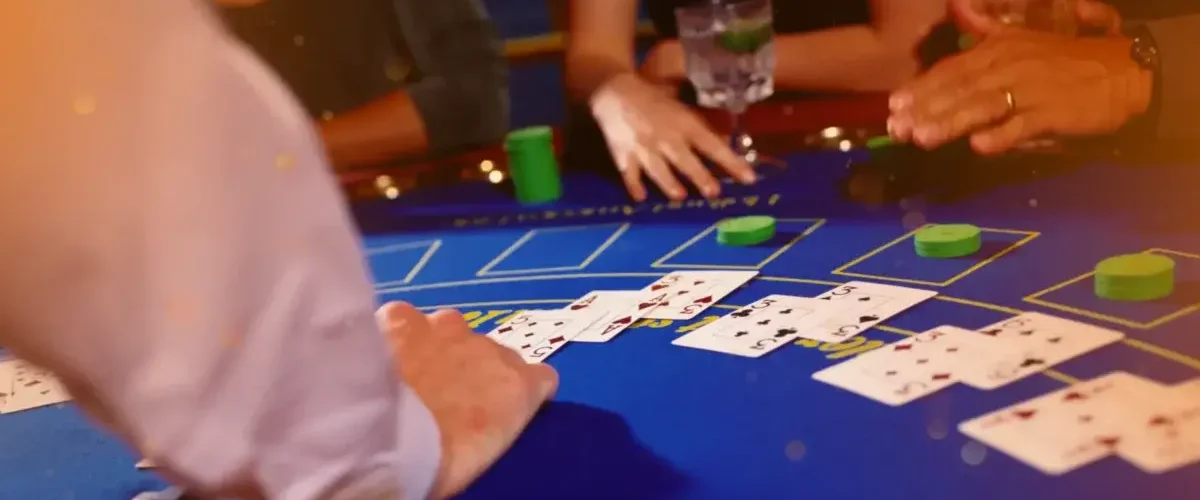
Blackjack has a history stretching back hundreds of years. Instead of growing around a wheel like roulette, its roots can be followed through European card games in which players tried to reach a certain total without going over it. One of the earliest examples comes from Spain, where a game called veintiuna was being played centuries before blackjack became a major casino game in America.
Veintiuna and Miguel de Cervantes
One of the earliest examples comes from Miguel de Cervantes, the Spanish writer behind Don Quixote. In his short story Rinconete y Cortadillo, written in the early 1600s and published in 1613, characters are shown playing a card game called veintiuna. The name means twenty-one in Spanish, and the goal was already very similar to blackjack. Players tried to reach 21 without going over, showing just how far back this type of card game goes.
An ace could also be used as either one or eleven, another feature connected to modern blackjack. The game was played using a Spanish deck instead of the standard 52-card French-suited deck more familiar to modern casino players. Modern blackjack isn’t identical to veintiuna, and plenty of rules were added or changed over the centuries. Regardless, the game shows that the central idea behind twenty-one games was already established more than 400 years ago.
From Spain to French Vingt-Un
A later version appeared in France under the name Vingt-Un, again meaning twenty-one. The game was being played in France by the 18th century and became one of several European versions of twenty-one. Different countries then put their own spin on it. In the UK, twenty-one became connected with Pontoon, while North American versions gradually became blackjack.
The evolution of blackjack continued as the game moved between countries. Names changed, local rules appeared and older ideas were reworked while enough of the original game remained to keep it recognisable.
The History of Baccarat
Of the three games, baccarat has the least clear early history. The history and origins of baccarat are often traced to Italy during the 15th century before the game later moved into France, but much of that early story is based on tradition instead of actual strong evidence.
Names such as Felix Falguiere are sometimes connected with the supposed invention of baccarat, while another well-known story links the game with an old ritual involving the number nine. Both have been shared for years, but neither is easy to prove.
Baccarat Banque and Chemin de Fer
By the 19th century, baccarat was already being played in France. Baccarat Banque, also known as Baccarat à Deux Tableaux, was one of the versions around at the time. Chemin de Fer came later and went on to become another well-known form of the game.
Chemin de Fer works differently from the version most commonly found in modern baccarat games. Players take a more active part in the banking side of the game, with the banking position passing around the table instead of staying permanently with the casino.
The name Chemin de Fer means railway in French. Exactly why the game picked up that name isn’t completely known, although explanations have included the movement of the dealing shoe and the idea of speed at a time when rail travel was transforming Europe. Baccarat was also turning up more often in larger and more formal casino settings by this point. Bigger tables and the way the game was dealt gave it a much different feel from blackjack.
The Arrival of Punto Banco
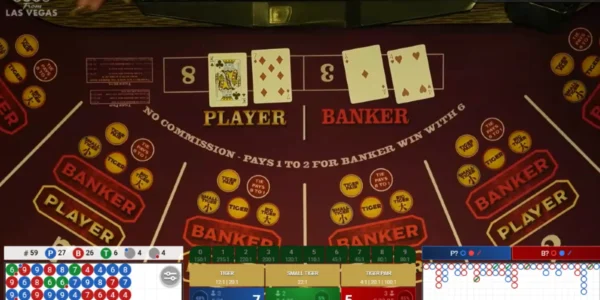
Punto Banco became the version of baccarat most often seen in modern casinos. An earlier form appeared in Argentina before the game developed further in Cuba during the 1940s and 1950s, where changes helped shape the version recognised today. Punto Banco removed much of the decision-making found in earlier versions. There are still hands called Player and Banker, but these are just the names of the two sides in the game instead of the people sitting at the table.
Cards are drawn according to fixed rules, making the game easier to run consistently across larger casino floors. That was the biggest change from versions in which participants were more involved with the bank or decisions over taking another card. Punto Banco reached Las Vegas by the end of the 1950s, with the Sands Casino helping introduce this version to American casino players. Casinos often kept the game in separate areas with large tables and higher stakes, which helped it keep much of its European style after crossing the Atlantic.
Baccarat and James Bond
No fictional character has probably done more for baccarat’s cultural image than James Bond. Ian Fleming’s first Bond novel, Casino Royale, was published in 1953 and places a major part of the story around a Chemin de Fer game between Bond and Le Chiffre. Fleming’s own experiences helped shape the casino setting. During the Second World War, he visited the casino at Estoril in Portugal and later used parts of that experience when creating the atmosphere of Casino Royale.
Later books and films continued to link baccarat with Bond, particularly through tuxedos, private casino rooms, international travel and espionage. The connection between casino games and popular culture meant even viewers who knew barely anything about the actual rules could understand the kind of world the game was being used to represent. The 2006 version of Casino Royale replaced baccarat with poker. By then, poker was much more familiar to a large cinema audience, particularly after games were put on TV and online poker became more popular during the early 2000s.
The Physical Look of Classic Casino Games
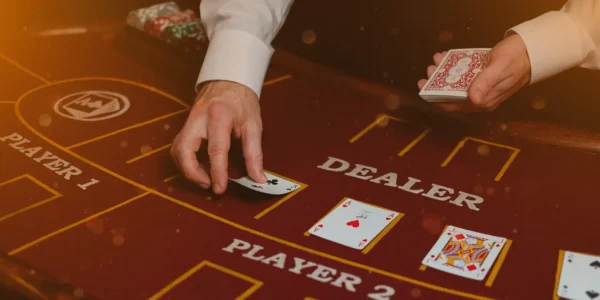
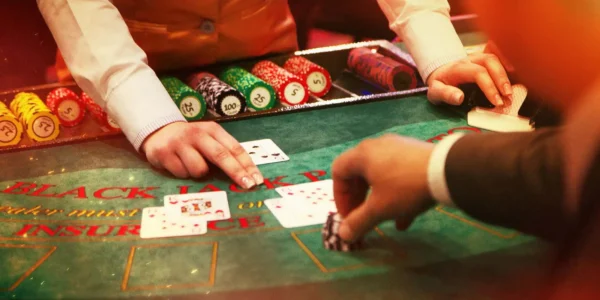
The way these games look also became familiar long before online casinos came along. Roulette has its wheel and long betting table, blackjack uses a curved table facing a dealer, while traditional baccarat normally has a much larger table. Those designs were practical, but they also became part of casino culture. A roulette wheel is recognisable even when it appears on its own, while blackjack and baccarat tables have their own familiar shapes.
Playing cards changed as well. Early European card games used different suits and deck sizes depending on the country, while French-suited cards using hearts, diamonds, clubs and spades eventually became widespread. That helped give card games a more universal look. Modern blackjack may descend from games played with different decks, but the version seen today is closely tied to the standard pack recognised around the world. Roulette went through something similar. Wheel designs changed over time, but the alternating red and black pockets, green zero and numbered sections became so familiar that later versions kept the same basic look.
From Physical Casinos to Online Games
One of the biggest changes came much later with the move from physical gaming rooms to computers, mobile devices and live streaming. Platforms like PokerStars allowed traditional games to be recreated digitally. Roulette no longer needs a player to stand beside a physical wheel, and blackjack can be offered as an online casino game.
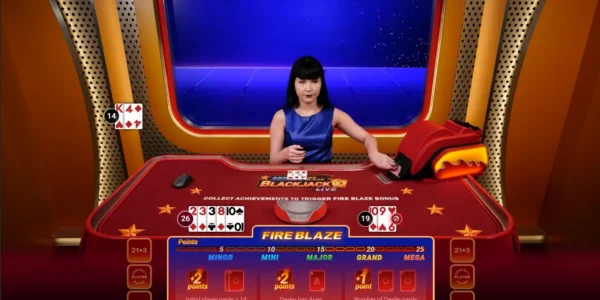
Live casino games take that a little further by using real dealers and streamed tables. The player joins the game online, while the wheel, cards and table stay physical. Technology has also made it easier to offer different versions of the same game. A physical casino needs room for another table, while an online casino can offer several variations without needing more floor space.
An 18th-century roulette player and someone accessing an online casino game today would obviously be having very different experiences. One would be standing in a gaming house, while the other might be using a phone or computer at home. Despite being separated by centuries, both players would still recognise the roulette wheel and understand the basics of how the game works. The same applies to blackjack, with 21 still at the centre of the game whether the cards are dealt at a table or appear on a screen.

Classic Casino Games Still Matter Culturally
Roulette, blackjack and baccarat have all picked up their own image outside the casino. Books, films and television have helped turn each one into something audiences recognise even without knowing every rule. Roulette has also become easy to recognise in films and television. Once the wheel starts spinning, there isn’t much that needs explaining because the audience can see straight away that everything comes down to where the ball lands.
Blackjack has taken a different path in films and television. Card counting and the decisions made during a hand have often been connected to numbers, memory and calculation. Baccarat became linked with formal casino settings and glamour, helped massively by James Bond. Large tables, formal dress and private rooms all became part of the way it was shown.
Classic Casino Game Timeline
- 1613: Miguel de Cervantes’ Rinconete y Cortadillo is published, featuring the Spanish twenty-one game veintiuna.
- 1796: Roulette is being played in Paris in a form close to the game recognised today.
- 1840s: François and Louis Blanc help make the single-zero roulette wheel popular at Bad Homburg.
- 1847: Charles Van-Tenac publishes an early detailed description of baccarat in France.
- Late 19th century: Chemin de Fer emerges as another version of baccarat.
- 1953: Ian Fleming publishes Casino Royale, with Bond playing Chemin de Fer against Le Chiffre.
- Mid-20th century: An earlier form of Punto Banco appears in Argentina, before further changes are made in Cuba during the 1940s and 1950s.
- 1959: The Sands introduces Punto Banco to its casino in Las Vegas.
Final Thoughts: Centuries of Casino History
Roulette, blackjack and baccarat have survived massive changes in where and how casino games are played. Roulette became firmly established in 18th-century France before the single-zero wheel helped shape the European version. Blackjack started with earlier games such as the Spanish veintiuna, before different versions of twenty-one appeared in France, Britain and North America.
Their surroundings have changed from European gaming houses and American casinos to online sites such as PokerStars Casino, but the basic games have stayed easy to recognise. Their long histories have also made roulette, blackjack and baccarat a lasting part of casino culture, with all three continuing to appear in books, films and modern casinos today.
FAQs
What is the oldest classic casino game?
Is blackjack originally an American game?
Where did roulette come from?
Why have roulette, blackjack and baccarat lasted so long?
Top Content


Trending