Fighting for Small Multiway Pots
One of the most overlooked areas of the game, where countless big blinds can be added to your win-rate, are the smaller unglamorous pots – the ones that no one seems to want. Spotting a pot that is being checked down by two or more opponents and finding an opportunistic bluff is a great way to improve your game.
While these pots may look insignificant in isolation, they occur extremely frequently. Winning just one or two additional small pots per session can have a surprisingly large impact on your long-term win rate. Many players focus exclusively on big pots and overlook these consistent opportunities to add extra big blinds to their bottom line.
An Unwanted Pot
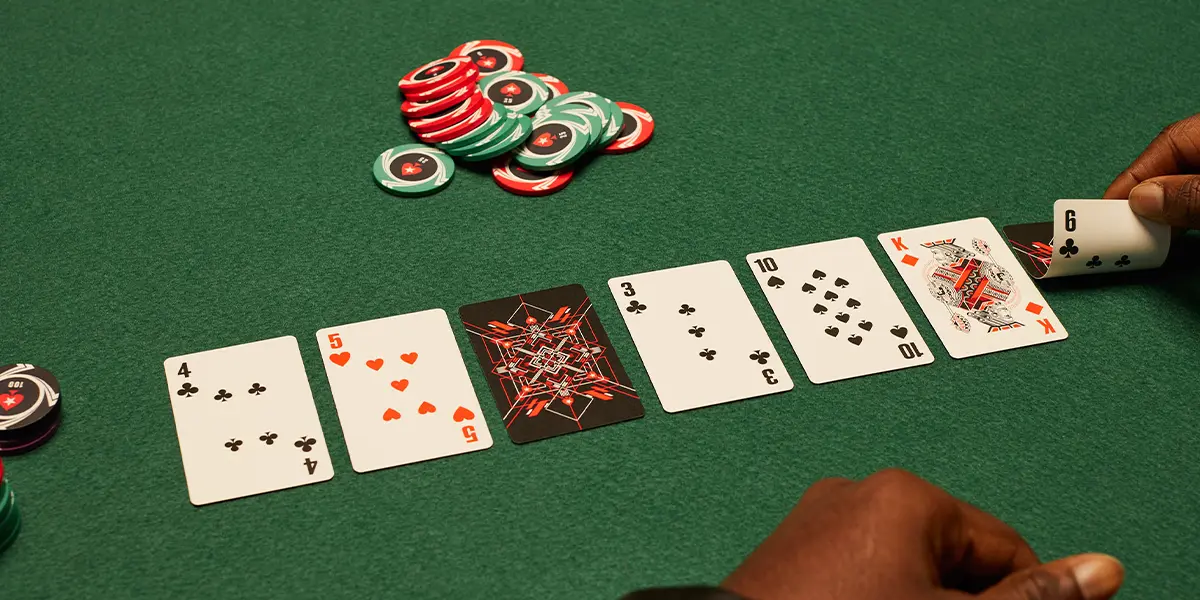
Hero finds himself in the big blind with 9♦7♦. The CO opens to 2BB and the SB calls. Hero gladly tosses in his one additional big blind to see the flop, which comes down J♥4♣4♠. Check check check and a turn falls. Once again, all three players check and the river is the 3♥. Small blind checks a third time and the action is on Hero with his pathetic 9-high, which has about a 0% chance of winning at showdown. Let’s do some hand reading and figure out what is going on here.
The CO is unlikely to have a Jack too often, at least not a good Jack, after he checks behind on the flop in a situation where top pair would want to build the pot and deny the opponents a free card. The SB could have a Jack but will probably not call too many Jx hands in this position pre-flop unless they are suited. His Ax would likely have attempted a value bet on the river so you can discount that. CO is very unlikely to hold Ax after his turn check. The majority of the time, then, each player holds something weaker than second pair. Naturally, not every checked-down pot should be bluffed. Passive action can sometimes disguise slow-played strong hands. The key is to recognise situations where the population is far more likely to hold weak showdown hands than monsters. Now onto the math of bluffing.
The Math of Bluffing
If you bet two thirds of the pot here in an attempt to fold out all hands worse than Jx, you will be risking 2 units to win 3 units. Your required fold equity percentage, meaning the amount of the time you will need both players to fold in order to break even on a bluff, is found by using the following equation:
Required Fold Equity = Risk / (Risk + Reward)
In this case: Required Fold Equity = 4BB / (4BB + 6BB) = 40%
If both opponents combined fold 40% of the time, you shall not lose any money of a bluff here; if they fold any more than this, you begin to profit.
For both opponents to fold 40% of the time, you need each of them to be folding around 63% of the time. This seems very reasonable indeed. In fact, I would estimate that each individual opponent is likely to be folding upwards of 70% here. Bluffing should make a lot of money.
Show Restraint with Showdown Value
Having showdown value means being able to win the pot a reasonable amount of the time unimproved at showdown. In order for this to be true on the checked down J♥4♠4♣3♥ board, you will need to have some kind of pair. Let’s imagine that you get to this same spot, but instead of the 9♠7♠, you hold 9♦9♣. You have showdown value with this hand, and quite a lot of it.
In the previous example, you were going to lose the pot all of the time by checking. This meant that the EV (expected value) of checking was 0. Therefore, if betting was in anyway positive EV, you preferred it to checking; and you found that it likely was positive since you were likely to meet the required fold equity target of 40% for making a two-thirds pot-sized bet.
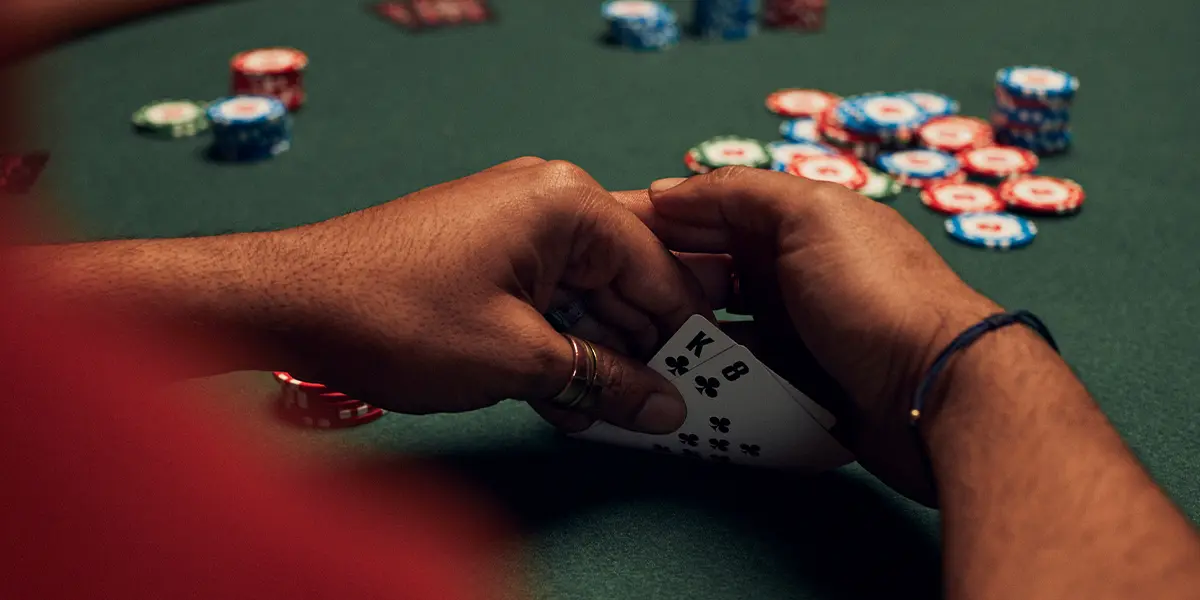
When you hold the 9♦9♣, however, you expect to win the pot a good amount of the time by checking. You might have the best hand here about 50% of the time. In this case, the EV of checking could be as much as 50% of the pot, or +3BB. This is now the target that you should try to exceed when you consider betting. Are you going to make more than 3BB by betting? The answer is certainly not. Actually, you are going to make less. Why is this the case?
With 9♦9♣, when you are called by either player, you expect to lose almost always, just like when you had the 9♠7♠. If you are to suppose that you get each player to fold 70% of the time, they will both fold 0.70 x 0.70 = 0.49 or 49% of the time. Let’s round this up and call it 50% for simplicity. When you bet the 9♦9♣ for two thirds of the pot, you win 6BB 50% of the time when both players fold, and lose 4BB (your bet) 50% of the time when someone calls. The EV of betting is, therefore, 6BB + -4BB = +2BB.
Checking is worth a whole big blind more than betting, if these assumptions are largely correct. This analysis demonstrates the importance of refraining from turning a hand with showdown value into a bluff – your bet might be profitable, but checking is more profitable.
Pro Tip
Whenever you consider turning a made hand into a bluff, ask yourself a simple question: “How often do I expect to win if I check?” If the answer is “fairly often”, your bluff has to outperform an already profitable checking option. This quick mental habit prevents many unnecessary bluffs.
Population Tendencies Matter
The ideas in this article work best against opponents who routinely check medium-strength hands and overfold rivers after passive action. Against players who are naturally curious or reluctant to fold, bluffing frequencies should be reduced accordingly. Always adjust to the tendencies of the player pool you are facing.
Summary
- Small multiway pots are often neglected. Be the one to take them down if you cannot win at showdown.
- Do not try to win pots by bluffing if you are going to win at showdown any way against the hands your opponents would fold.
- Your goal is not just to take a +EV line, but to take the highest EV line. Checking might be even better than making a profitable bet.
- Before bluffing, always compare the EV of betting with the EV of simply checking. A profitable bluff is not necessarily the most profitable decision.


View Other Blogs