Soft Hands vs Hard Truths: The Most Misplayed Blackjack Scenarios
Blackjack is often considered one of the most strategic casino games because the decisions you make can influence the outcome of each hand. Unlike games that rely entirely on chance, every round presents choices, whether to hit, stand, double down or split. Learning when to make these decisions is a key part of improving your play.
Some of the most difficult blackjack situations, however, are also the ones that feel the least intuitive. Standing on a hand that seems weak or hitting a total that looks safe can feel completely wrong, even when it’s the mathematically correct decision. It’s this conflict between instinct and probability that causes many players to make the same mistakes time and time again.
Basic blackjack strategy isn’t designed to help you win every hand. Instead, it’s based on choosing the option with the highest expected value over thousands of hands. That means some decisions may occasionally lead to an immediate loss, but they remain the correct play in the long run.
Why do blackjack strategy charts sometimes differ?
Basic strategy isn’t identical for every blackjack game. The correct play can change depending on the table rules. Factors such as the number of decks in play, whether the dealer hits or stands on soft 17, whether doubling after splitting is allowed, and if surrender is available can all affect the mathematically optimal decision. That’s why it’s always worth checking the table rules before you play.
In this guide, we’ll look at some of the most commonly misplayed situations in blackjack, explain the difference between soft and hard hands, and explore why the mathematically correct move isn’t always the one that feels most comfortable. Understanding the reasoning behind these decisions can help you approach the table with greater confidence and make more consistent choices throughout your sessions.
What Are Soft and Hard Hands?
Before looking at the blackjack situations that players commonly misplay, it’s important to understand the difference between soft and hard hands. These terms describe how an Ace functions within your hand and play a significant role in determining the best strategy.
What Is a Hard Hand?
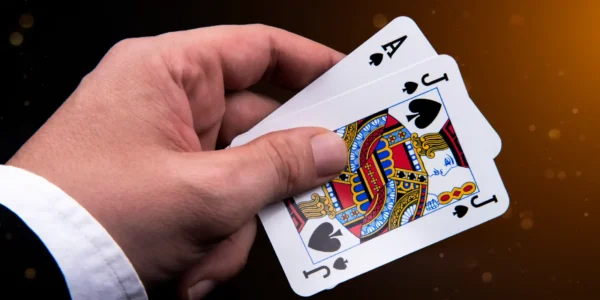
A hard hand is any hand that either doesn’t contain an Ace or contains an Ace that can only be counted as one without causing the total to exceed 21. Because there isn’t much flexibility, every additional card carries a greater risk of busting.
For example, a hand made up of a 10 and a 6 is a hard 16. If you draw a card worth six or more, you’ll go over 21 and lose the hand immediately. Likewise, an Ace, 9 and 7 is also considered a hard 17, as counting the Ace as 11 would take the total above 21.
Hard hands often require the most difficult decisions because there’s a fine balance between improving your total and risking a bust.
What Is a Soft Hand?
A soft hand contains an Ace that can be counted as either one or 11 without the hand going over 21. This gives you far more flexibility because drawing another card doesn’t automatically mean you’ll bust. If necessary, the Ace simply changes from a value of 11 to a value of one.
For example, an Ace and 6 is a soft 17. If you draw a 10, your Ace becomes worth one instead of 11, giving you a total of 17 rather than 27. This safety net allows players to be much more aggressive with certain soft hands than they would with comparable hard totals.
Why the Difference Matters
Many new players treat soft and hard hands in exactly the same way because the totals appear similar. For example, a hard 17 and a soft 17 both add up to 17, but they’re very different hands from a strategic perspective.
A hard 17 is generally considered strong enough to stand because any additional card carries the risk of busting. A soft 17, on the other hand, has room to improve without that same danger, making hitting or even doubling down the preferred option in many situations.
Recognising whether your hand is soft or hard is one of the first steps towards using basic blackjack strategy effectively. Once you understand the difference, many of the game’s most surprising decisions begin to make much more sense.
Why Instinct Can Work Against You
One of the reasons blackjack can be so challenging is that the mathematically correct decision doesn’t always feel like the safest one. Our instincts naturally encourage us to protect what we already have, even when taking a calculated risk offers the better outcome over time.
We Naturally Fear Busting

For many players, the biggest concern is going over 21. As a result, it’s tempting to stand on totals like 12, 13 or 16 simply because taking another card feels dangerous.
The problem is that avoiding an immediate bust doesn’t necessarily improve your chances of winning the hand. If the dealer is showing a strong upcard, standing on a weak total often leaves you relying on the dealer to make a mistake. In many situations, accepting the possibility of busting gives you a better overall chance of winning than standing on a hand that’s unlikely to hold up.
One Result Doesn’t Prove a Decision Was Wrong
It’s easy to judge a decision based on what happened next. Imagine you hit a hard 16, draw a face card and bust. Your first thought might be that you should have stood.
In reality, that single outcome doesn’t tell you whether the decision was correct. Blackjack strategy is built around probability, not hindsight. A mathematically correct play can still produce a poor result, just as an incorrect decision can occasionally work out in your favour.
The aim isn’t to make the decision that wins this hand. It’s to make the decision that performs best over hundreds or even thousands of similar hands.
Understanding Expected Value
Professional players and blackjack strategy charts are guided by a concept known as expected value (EV). Put simply, expected value measures which decision is likely to produce the best average outcome over the long run.
Rather than asking, “Will this work right now?”, expected value asks, “Which choice loses the least or wins the most over time?”
That’s why some blackjack decisions seem counterintuitive. Hitting a weak total, doubling a soft hand or splitting a pair may feel uncomfortable, but those plays have been shown through mathematical analysis to offer the highest expected value in those situations.
Once you begin thinking in terms of long-term probabilities rather than individual outcomes, many of blackjack’s most confusing strategy recommendations become much easier to understand.
The Most Commonly Misplayed Blackjack Hands
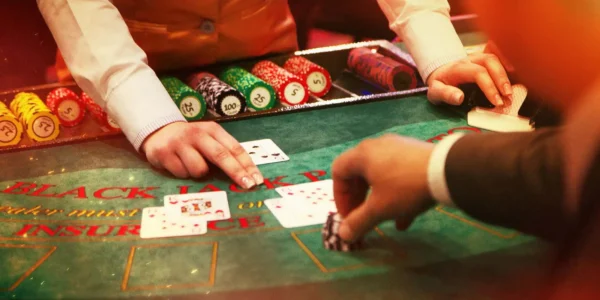
Some blackjack decisions are straightforward. Standing on a hard 20 or hitting a hard 11 rarely causes much debate. Others, however, divide opinion because the mathematically correct play often feels uncomfortable. These are the hands where instinct and probability tend to point in different directions.
Soft 18 Against a Strong Dealer Upcard
A soft 18 (an Ace and a 7) is one of the most commonly misplayed hands in blackjack. Since 18 is a relatively high total, many players automatically stand regardless of what the dealer is showing.
However, basic strategy often recommends a more aggressive approach. Against stronger dealer upcards, such as a 9, 10 or Ace, hitting can offer a better long-term expectation because standing on 18 frequently isn’t enough to beat the dealer’s final hand. Against certain weaker dealer cards, doubling down may also be the optimal play if the rules allow.
This surprises many players because hitting on 18 seems unnecessarily risky. In reality, the flexibility of a soft hand means there’s no immediate danger of busting. If your next card is worth 10, your Ace simply changes from 11 to one, leaving you with a hard 18 instead of going over 21.
Hard 16 Against a Dealer 10
Few blackjack hands make players as uncomfortable as a hard 16 against a dealer’s 10. Whether your 16 is made from a 10 and 6, a 9 and 7 or another combination, neither option feels particularly appealing.
Standing leaves you with a weak total that the dealer will often beat. Hitting creates a strong possibility of busting. Despite this, basic strategy generally recommends hitting if surrender isn’t available, because standing performs even worse over the long term.
If the casino offers late surrender, many strategy charts recommend surrendering this hand instead. While surrendering means forfeiting half your original stake, mathematical analysis shows that this is often preferable to playing out a particularly unfavourable situation.
Hard 12 Against a Dealer 2 or 3
Hard 12 sits in an awkward middle ground. It’s too high to hit comfortably, but rarely strong enough to stand with confidence.
Many beginners instinctively hit because 12 feels like a weak hand. However, against a dealer showing a 2 or 3, basic strategy typically recommends standing. Although your total isn’t especially strong, these dealer upcards are more likely to develop into weaker final hands than stronger ones.
The recommendation can seem surprising because standing on 12 feels passive. However, in this specific situation, the maths shows that standing produces slightly better long-term results than risking an unnecessary bust.
Soft 17
At first glance, a soft 17 may appear reasonably safe. After all, the Ace gives you protection against busting, and 17 doesn’t seem like a particularly poor total.
In reality, soft 17 is one of the weakest soft hands you’ll regularly encounter. Since there’s very little risk in taking another card, basic strategy often recommends hitting or doubling down against favourable dealer upcards. Remaining passive with a soft 17 usually means settling for a total that won’t win very often.
Understanding the flexibility of soft hands is one of the biggest adjustments new blackjack players need to make. The ability to improve your hand without immediately risking a bust makes aggressive play much more attractive than it first appears.
Pair of 8s
Splitting a pair of 8s is another move that many players hesitate to make. After all, splitting means doubling your original wager while breaking apart a total of 16, something that can feel risky.
However, keeping the pair together leaves you with one of the weakest hard totals in blackjack. By splitting, you’re giving yourself the opportunity to build two much stronger hands instead of relying on a difficult 16 to beat the dealer.
Although the outcome of each individual hand remains uncertain, splitting 8s consistently produces better long-term results than playing the pair as a single hand.
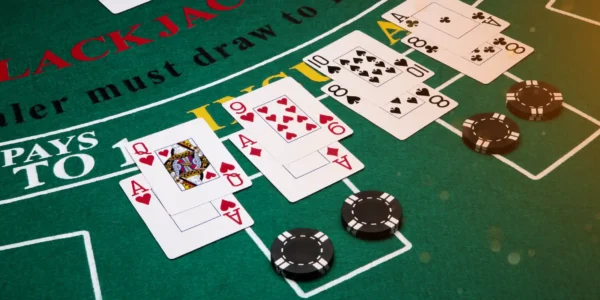
Pair of 10s
If splitting 8s feels uncomfortable, splitting 10s often feels exciting. Some players see a dealer showing a weak card and view it as an opportunity to chase two winning hands instead of one.
Basic strategy almost always recommends resisting that temptation. A pair of 10s gives you a total of 20, one of the strongest hands you can receive in blackjack. Breaking it apart means giving up an excellent position in exchange for two hands that may never reach the same strength.
While splitting 10s occasionally results in a memorable win, it generally sacrifices long-term expected value for the possibility of a larger short-term payout.
Taking Insurance
Insurance is another area where instinct can work against you. When the dealer shows an Ace, the side bet can seem like a sensible way to protect your original wager in case they have blackjack.
For most players, however, insurance isn’t recommended. The payout may appear attractive, but unless you have additional information about the remaining cards, such as through card counting, the bet generally offers poor value over time.
It’s also worth distinguishing insurance from even money. If you have a natural blackjack and the dealer shows an Ace, taking even money guarantees your payout regardless of the dealer’s hole card. Although it’s effectively the same wager as insurance, some players prefer the certainty of locking in a win. For most recreational players, however, basic strategy generally advises declining insurance and even money in the long run.
These scenarios are among the most frequently misplayed because they challenge natural instincts. They demonstrate that successful blackjack decisions aren’t based on what feels safest in the moment, but on what mathematics shows is most effective over thousands of hands.
Learning to Trust the Maths
One of the biggest challenges in blackjack isn’t learning the rules, it’s learning to trust the strategy. Many of the game’s recommended plays feel uncomfortable at first because they go against instinct. Standing on a weak total, hitting a hand that looks safe or splitting a pair can all seem like risky decisions, even when they’re supported by mathematics.
Basic Strategy Is Built on Probability
Basic strategy wasn’t developed through guesswork. It is based on mathematical analysis of millions of possible blackjack hands, identifying the decision that offers the highest expected value in each situation.
That doesn’t mean every recommended play will produce an immediate win. In fact, some correct decisions will still result in losing the hand. The key is understanding that basic strategy is designed to improve your results over the long term rather than guaranteeing success in individual rounds.
Don’t Judge Decisions by the Outcome
One of the easiest traps to fall into is believing a strategy recommendation is wrong because it didn’t work once.
For example, imagine you correctly hit a hard 16 against a dealer’s 10 and immediately draw a face card to bust. It’s natural to think standing would have been the better decision. However, the outcome of that single hand doesn’t change the mathematics behind the recommendation.
Good blackjack decisions should be judged by whether they were the correct choice at the time, not by what happened afterwards. Even professional players experience sessions where correct decisions lead to disappointing results.
Consistency Is More Important Than Perfection
Nobody memorises an entire basic strategy chart overnight. Most players learn gradually, becoming familiar with the most common situations before tackling the more complicated hands.
Many also keep a strategy card with them while playing in casinos where it’s permitted, or use one while playing online. Referring to a chart isn’t a sign of inexperience, it’s a practical way to reinforce good habits until the correct plays become second nature.
The goal isn’t to play perfectly from day one. It’s to make slightly better decisions, more consistently, every time you sit down at the blackjack table.
Related Blackjack Articles
Conclusion
Some of the best blackjack decisions are also the least intuitive. Hitting a soft 18, splitting a pair of 8s or declining insurance can feel uncomfortable in the moment, but these recommendations are based on long-term probability rather than instinct.
Understanding the difference between soft and hard hands is an important first step, but the real challenge is trusting the mathematics behind basic strategy. While no approach can eliminate the house edge or guarantee a winning session, consistently making the highest expected-value decision gives you the best chance of achieving favourable results over time.
It’s also important to remember that a correct decision won’t always produce the outcome you want. Blackjack is still a game of chance, and short-term variance means even the best players experience losing hands and sessions. Rather than judging your play by individual results, focus on whether you made the right decision with the information available at the time.
By learning the situations that players most commonly misplay and understanding why the recommended strategy sometimes feels counterintuitive, you’ll be better equipped to approach every hand with confidence. In blackjack, trusting the maths is often far more rewarding than trusting your instincts.
Blackjack FAQs
What’s the difference between a soft hand and a hard hand in blackjack?
Why do blackjack strategy charts recommend hitting some high totals?
Should I always split a pair of 8s?
Is it ever a good idea to split 10s?
Why is insurance usually not recommended?
Do I need to memorise the entire basic strategy chart?
Top Content


Trending