Casino Game Rules and Variations – Understanding What You’re Playing
Casino rules can change more than players might expect. Two Blackjack tables might use the same cards and have the same basic goal, yet one pays more for a natural blackjack. Roulette can use the familiar red and black numbers on both tables but add an extra zero to one wheel.
These details are worth checking because they can change both the maths and the way a casino game plays. Sometimes it’s the payout that changes. Other times, it might be when the dealer draws a card, what happens after a tie or how an extra bet is settled. This becomes more noticeable when moving between different Blackjack tables or live casino games on platforms like PokerStars.

Why Casino Rules Matter
Blackjack, roulette and baccarat are often talked about as though there’s only one fixed version of each. But in truth, while the basic idea tends to stay the same, tables, online versions and live casino games can use different rules. Blackjack is one of the best examples. One game might pay 3:2 for blackjack, while another uses 6:5. The dealer might stand on Soft 17 at one table and hit it at another. There can also be different rules for splitting, doubling, surrender and what happens to extra bets if the dealer later gets blackjack.
Roulette is easier to spot just by looking at the wheel. European Roulette has one zero, while American Roulette adds 00 as well. Both still have numbers 1 to 36 and many of the same bets, but that extra pocket changes the house edge. Baccarat has fewer decisions for the player, but the payouts can still vary. Standard games normally take commission from winning Banker bets, while some versions remove the commission and change the payout when Banker wins with a particular total.
Blackjack Rules Can Change Between Tables
Blackjack doesn’t have one set of rules used everywhere. The aim of getting closer to 21 than the dealer without going over is still there, but the rules around that can change. This applies to both traditional tables and live casino Blackjack.
Blackjack Paying 3:2 vs 6:5
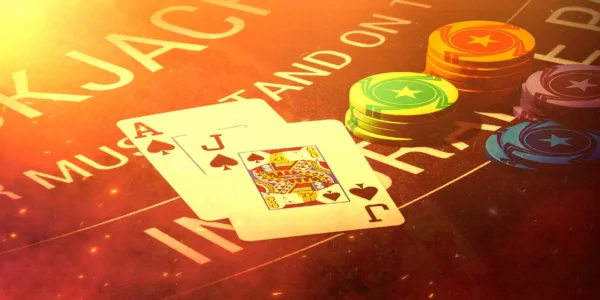
The payout for a natural Blackjack is one of the first things worth checking. At a 3:2 table, a £10 blackjack pays £15 in profit. At 6:5, that same £10 natural pays £12. A difference of £3 might not sound huge on one hand, but natural blackjacks happen often enough for the reduced payout to make a difference over time. Moving from 3:2 to 6:5 adds roughly 1.4% to the house edge when the other rules stay the same.
Nothing else about the hand has changed. An Ace and a ten-value card are still blackjack. The only difference is how much that hand pays. It’s an easy rule to overlook because two Blackjack tables can look almost identical. A player could move from one to another and only spot the change by checking the payout shown on the table or in the rules.
Does the Blackjack Dealer Hit or Stand on Soft 17?
Soft 17 is another common Blackjack variation found on PokerStars. A Soft 17 has an Ace being counted as 11, such as Ace-6. Some tables require the dealer to stand on all 17s, including Soft 17. Others tell the dealer to hit when the hand is a Soft 17.
Dealer Stand on Soft 17 is generally a little better for the player mathematically than Dealer Hit on Soft 17. The difference is fairly small, but over a large number of hands it still affects the house edge. Standing on Soft 17 is a very common format, but it’s still better to check the individual game instead of assuming every Blackjack table works in the same way.

Hole Card and No-Hole-Card Blackjack
Blackjack can also change depending on when the dealer gets a second card. In many American-style games, the dealer gets a hidden second card at the start of the hand. When an Ace or ten-value card is showing, the dealer might check for blackjack before players go on to split or double. European-style Blackjack often uses a No Hole Card rule instead. The dealer begins with one face-up card and doesn’t get the second card until the players have finished making their decisions. That can matter when extra money has already gone onto the table.
For example, a player could begin with £10, double to £20 and then find out that the dealer has blackjack after taking the second card. Under some rules, the full £20 is lost. The same issue can happen after splitting and placing another bet on the extra hand. Not every no-hole game works in exactly the same way. Some use Original Bets Only (OBO) rule. With OBO, extra money placed through a split or double may be returned if the dealer eventually has blackjack, leaving only the original bet lost.
Splitting Aces and Other Pairs in Blackjack
Splitting is when a player is dealt two matching cards and separates them into two hands by placing an extra bet. Aces normally come with extra restrictions. After splitting a pair of Aces, many Blackjack games deal just one extra card to each Ace. If an Ace then gets a 10-value card, the resulting 21 normally counts as an ordinary 21 instead of a natural blackjack. That means it usually pays 1:1 instead of 3:2.
Rules for 10-value cards can differ as well. Some games allow only identical pairs to be split, such as two Jacks. A Jack and Queen might both be worth ten, but that does not always mean the table allows them to be separated into two hands. There can also be limits on resplitting. One table might let a pair be split again if another matching card shows up, while another stops after the first split.
Blackjack Surrender Rules
Some Blackjack games include surrender, while others leave it out completely. Late Surrender allows the player to give up the hand and lose half of the original bet instead of playing it. It normally happens after the dealer has checked for blackjack. Surrender doesn’t remove the house edge; it just gives the player another option.

Roulette Rules Can Change with the Wheel
A standard European Roulette wheel has 37 pockets. There are numbers 1 to 36 plus a single green zero. American Roulette has 38. It keeps the same 1 to 36 and zero, then adds 00. That extra pocket is enough to make a difference because the normal payouts don’t increase with it. This also applies to live roulette tables.
European Roulette and the Single Zero
On a European wheel, there are 37 places for the ball to land on. A straight-up bet on one number normally pays 35:1, while the actual odds against hitting that number are 36:1, as there are 36 other pockets where the ball could land. That difference between the probability and payout creates a house edge of around 2.70%.
American Roulette Adds 00
American Roulette adds another possible result but leaves the familiar payouts in place. There are 38 pockets but a straight-up number still pays 35:1. Red/Black still pays 1:1, and so do Odd/Even and High/Low. That extra 00 pushes the standard house edge to around 5.26%.
French Roulette and La Partage
French Roulette normally uses the same single-zero wheel as European Roulette, but it can add extra rules for even-money bets. One of the best known is La Partage. If an even-money bet is placed and the ball lands on zero, half of the bet is returned to the player instead of the whole amount being lost. So, if £10 is on Red and zero lands, £5 is returned. This reduces the house edge on the even-money bets from around 2.70% to 1.35%. Another French Roulette rule is En Prison. Instead of settling a bet straight away when zero lands, the bet can stay on the table for another spin. The exact way it’s handled depends on the rules used by that table.
Called Bets on French-Style Roulette
Some roulette tables also show a racetrack section with the called bets. Voisins du Zéro covers 17 numbers around zero on the wheel. Tiers du Cylindre covers 12 numbers on the opposite side, while Orphelins covers the rest of the eight numbers. They might look like separate types of roulette bets at first, but they are combinations of standard inside wagers placed across different sections of the wheel. They use different numbers of chips as well, so the total bet is another thing worth checking before placing one.
Related Live Casino Articles
Inside and Outside Roulette Bets
Roulette rules also cover how the different bets are paid. Inside bets focus on individual numbers or small groups of numbers. A straight-up bet covers just one number and normally pays 35:1. Splits, streets, corners and lines cover more numbers with lower payouts.
Outside bets cover larger sections. Red/Black, Odd/Even and High/Low normally pay 1:1, while dozens and columns pay 2:1. On a standard European wheel, Red covers 18 numbers. There are still 19 other possible results because zero is neither red nor black. This is why an even-money roulette bet is not exactly a 50/50 bet.
Baccarat Rules and Payout Variations
Baccarat has less player decisions than Blackjack. The drawing rules decide when the Player and Banker hands take another card, so players aren’t choosing whether to hit or stand. Most of the differences between baccarat versions come from the way the bets pay. Several versions can appear alongside each other on PokerStars, including standard baccarat.
Standard Baccarat Bets
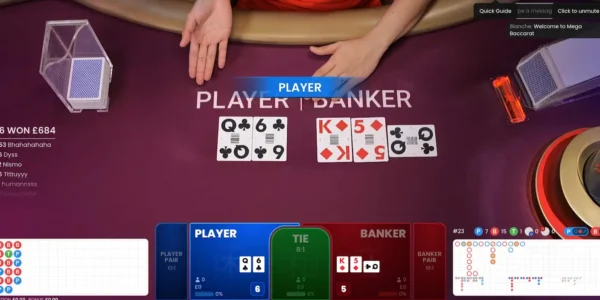
The main bets in baccarat are Player, Banker and Tie. A winning Player bet normally pays 1:1. Banker also pays at even money in standard baccarat, but a 5% commission is taken from a winning Banker wager. On a £10 Banker win, that means £9.50 in profit instead of the full £10. The Banker hand has a small edge because of the way the fixed drawing rules work. After the usual 5% commission on winning Banker bets, the house edge is around 1.06% on Banker and 1.24% on Player.
No-Commission Baccarat
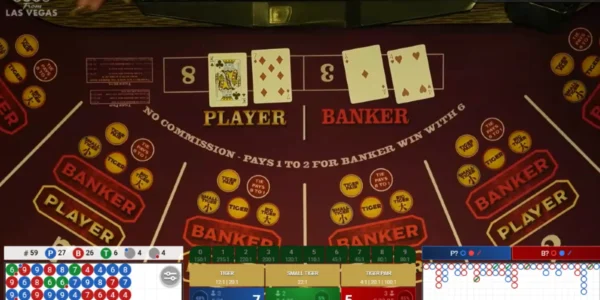
No-commission baccarat takes away the usual 5% commission from winning Banker bets, but there’s normally another rule in its place. One common version is Super 6. Winning Banker bets usually pay the full 1:1, but when Banker wins with a total of 6, the payout is reduced to 1:2. A £10 Banker win would normally end with £10 in profit. If that win comes with a total of 6 under these rules, the profit falls to £5.
Baccarat Side Bets
Baccarat tables on PokerStars often add side bets alongside Player, Banker and Tie. Player Pair and Banker Pair are common examples. These normally pay when the first two cards on the chosen side create a pair. A typical payout is 11:1, but the bigger payout comes with a much lower chance of landing a pair. With an eight-deck shoe, the house edge on these pair bets can be around 10.36%.
What Happens When Baccarat Ends in a Tie?
A tied baccarat round doesn’t normally mean Player and Banker wagers lose. If both hands finish on the same total, standard Player and Banker bets are usually returned. With that said, a separate bet placed specifically on Tie is the bet that wins. Both 8:1 and 9:1 are typical Tie payouts, and that one-unit difference can make quite a large change to the house edge. At 9:1, the house edge can be around 4.85%. At 8:1, it can rise to around 14.36%.

How Casino Rules Can Vary in a Live Casino
A live casino takes familiar table games such as Blackjack, roulette and baccarat and plays them with a real dealer streamed to the player. Having a dealer doesn’t mean every table follows exactly the same rules, however. Two live Blackjack tables might have different blackjack payouts or rules for Soft 17. Baccarat tables can use standard commission or no-commission payouts, while live roulette can use European, American or French-style rules.
The pace can vary as well. PokerStars Live Casino titles, for example, can have standard tables as well as faster versions. There are also several feature-based versions that take the traditional game and evolve it.
Feature-Based Variations on PokerStars
Some of the live casino games on PokerStars add extra features instead of just changing the speed of play. The usual rules are still there, but jackpots, multipliers and bonus features can change how certain wins are paid.
Live FashionTV Dragon Jackpot Baccarat keeps the usual baccarat setup with Player, Banker and Tie, but adds a Dragon Jackpot alongside the main game. A winning Tie can trigger a bonus wheel when a Tie bet was placed, with four progressive jackpots available: Green Dragon, Blue Dragon, Red Dragon and Golden Dragon. The jackpot sits alongside the main hand, so the way the cards are dealt and the standard baccarat outcomes stay the same.
Live Lightning Roulette keeps the familiar European wheel with 37 pockets and the usual inside and outside bets. Before each spin, however, between one and five Lucky Numbers are selected and given multipliers, normally between 50x and 500x. These apply to Straight Up bets when one of the selected numbers wins. A normal Straight Up win without a multiplier pays 29:1 instead of the usual 35:1.
Live Quantum Blackjack Plus adds multipliers to Blackjack. Before the cards are dealt, certain card ranks are selected and given multipliers such as x2.5, x3, x5 or x10. If a winning player hand contains one of those cards, the main-bet payout can be increased. The usual decisions to hit, stand, double or split are still there, although some tables also use extra rules, such as a dealer three-card bust pushing the main bet unless a multiplier payout applies.

Final Thoughts: Casino Rules Can Change the Odds
Small changes to casino rules can make a surprisingly big difference to familiar games. Blackjack paying 3:2 rather than 6:5 changes the return on every natural blackjack. American Roulette adds a second zero without increasing the standard payouts, taking the house edge from around 2.70% to 5.26%. No-commission baccarat removes the usual Banker charge but can reduce the payout when Banker wins with 6.
The games still look familiar, but the payouts and rules can be different. That applies just as much to the live casino games on PokerStars, where several versions of Blackjack, roulette or baccarat may sit alongside one another. This is why it’s important to check the rules of a table before making real money bets.
FAQs
Why Do Casino Rules Matter?
Does Every Blackjack Table Use the Same Rules?
What Is the Difference Between European and American Roulette?
Can Live Casino Games Use Different Rules?
Does a Lower House Edge Mean a Player Will Lose Less?
Top Content



Trending